

Total Leather Care
A considered guide to caring for full-grain leather
Leather is meant to be lived with. Over time, it softens, deepens in color, and tells a story that’s uniquely its own. With the right care, that story only gets better.
This guide is designed to help you care for your leather thoughtfully—preserving its character, protecting its surface, and extending its life for years to come.
Before You Begin
Set aside a few quiet moments. Remove jewelry to avoid accidental scratches, and make sure your hands and cloths are clean. If you’re caring for multiple items in different colors, use a separate microfiber cloth for each to prevent dye transfer.
Our leather is full-grain by design. Natural marks, subtle variations, and scars are not flaws—they’re part of the hide’s history. These characteristics cannot be removed, nor should they be. They’re what make each piece singular.
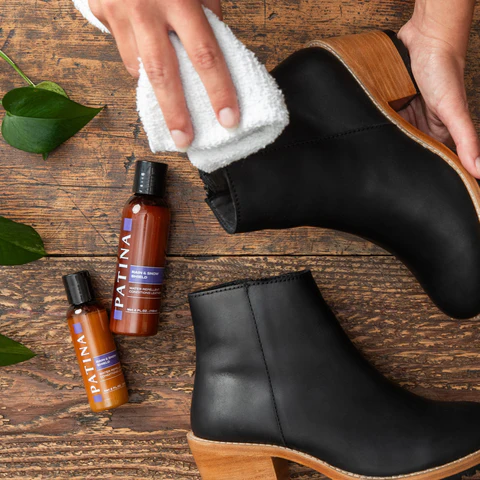
Understanding Leather Care
Not all leather needs the same treatment at the same time. Care generally falls into three categories: cleaning, protecting, and conditioning.
Cleaning
Cleaning removes surface dirt, dust, and light stains. This step isn’t always necessary, but when it is, let the product do the work. Gentle application is key—never scrub. Cleaning will refresh the surface, but it won’t remove scratches or scuffs that are part of normal wear.
Protecting
Protection is preventative. A protective layer helps repel moisture and stains before they have a chance to settle into the leather. New leather benefits most from this step, and protected leather is easier to clean over time.
Conditioning
Conditioning restores moisture to leather that has begun to dry with use. Much like skin, leather needs hydration to remain supple and resilient. Conditioning helps preserve color, maintain softness, and prevent cracking—especially for well-loved pieces.
When to Clean
It’s time to clean your leather when it starts to feel coated, sticky, or visibly dull. These are signs that dirt, oils, and residue are sitting on the surface and should be removed before they sink deeper into the leather.
Visible dirt or dullness – The surface appears cloudy, uneven, or slightly sticky to the touch.
Darkened areas – High-contact spots like collars, cuffs, or armrests look darker than surrounding leather.
Changes in odor – Musty, oily, or sour smells indicate trapped sweat and buildup.
- Uneven texture – The leather feels tacky, rough, or grainy instead of smooth.
When to Condition
Conditioning restores moisture and flexibility to leather that feels dry, stiff, or lifeless. If your leather looks clean but lacks softness or bounce, it’s ready to be nourished.
Dryness or stiffness – Leather feels tight and less flexible than normal.
Fine lines or early cracks – Small creases signal the beginning of dehydration.
Fading color – Sun exposure has drawn out natural oils and pigments.
Loss of luster – The finish looks flat and lacks its natural glow.
Tip: As a general rule, clean your leather every 6–12 months, then condition immediately after—or anytime it starts to look or feel tired.