

In leather production, one of the most critical steps is tanning—the process that transforms raw animal hide into durable, long-lasting leather. Tanning alters the hide’s natural protein structure, protecting it from decomposition while enhancing its strength, flexibility, and usability.
There are several tanning methods, each producing leather with distinct textures, characteristics, and performance qualities. In this guide, we’ll explore how leather is tanned, why the process matters, the steps before and after tanning, and the most common tanning techniques used today.
What Is Leather Tanning?
Leather tanning is the chemical and physical process of converting raw animal hides into stable, usable leather. Untreated hides naturally decompose over time; tanning prevents this by permanently stabilizing the skin’s collagen fibers.
Before tanning begins, the hide is cleaned and flattened by removing hair, fat, and flesh. It is then treated with tanning agents that make the leather resistant to moisture, bacteria, and environmental wear. Once tanned, the hide becomes strong, flexible, and suitable for applications such as clothing, furniture, upholstery, and accessories.
Why Leather Tanning Is Important?
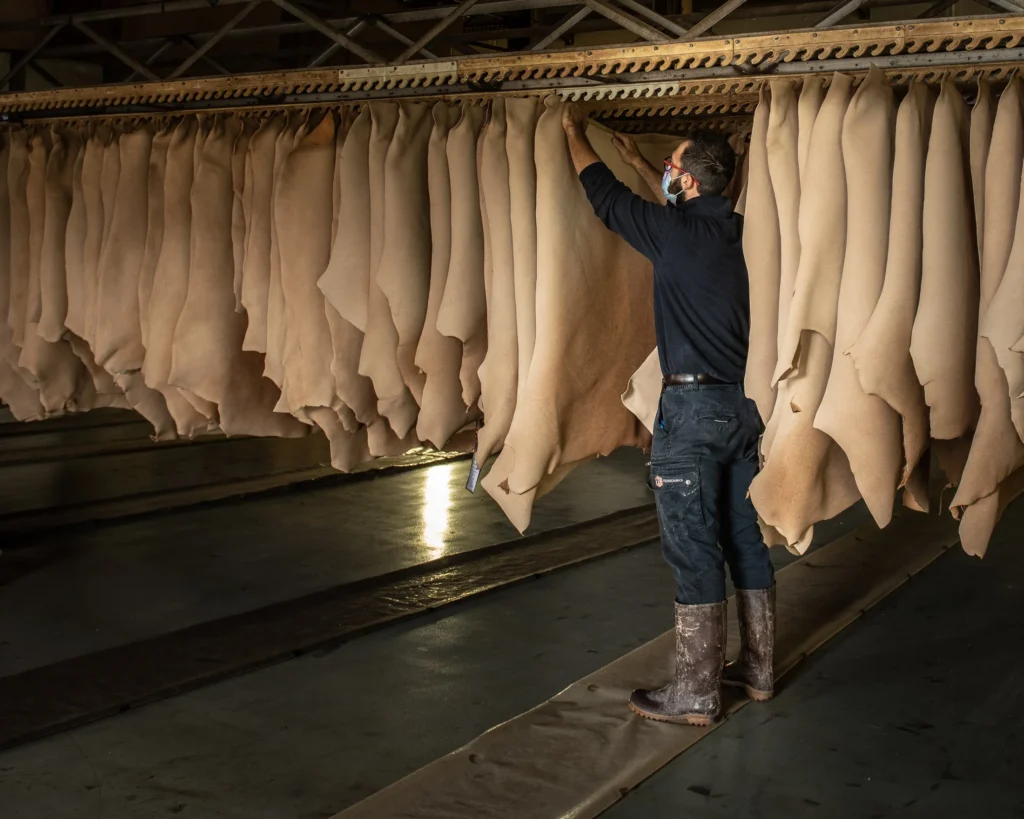
Tanning is essential to preserving the hide and extending its lifespan. Properly tanned leather becomes highly resistant to abrasion, chemicals, heat, and everyday wear. It also helps the material retain moisture and flexibility, preventing it from becoming dry, brittle, or cracked over time.
Among all the steps involved in leather production, tanning plays the most significant role in determining durability, performance, and overall quality.
How Leather Is Tanned: An Overview of the Process
Leather tanning involves a series of carefully controlled steps and treatments that vary depending on the desired end product. Modern technology has greatly improved tanning efficiency, reducing the time and labor once required while producing more consistent results.
Preparing the Hide for Tanning
Before tanning, hides must be thoroughly cleaned and preserved. This preparation stage removes contaminants such as blood, dirt, and fat, ensuring the hide is ready to absorb tanning agents.
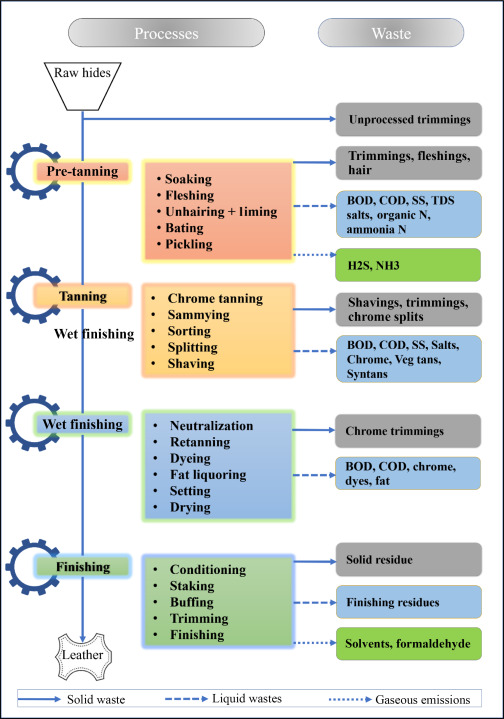
The process begins with curing, which halts decomposition. Common curing methods include dry or wet salting, freezing, or sun drying. After curing, hides undergo washing, soaking, liming, fleshing, and unhairing to fully prepare them for tanning.
Once the hides reach the tannery, the following steps take place:
1. Bating
Bating uses enzymes to soften the hide and remove unwanted proteins. This step determines the final softness and flexibility of the leather.
2. Pickling
Pickling acidifies the hide, lowering its pH to make it more receptive to tanning agents. This step is especially important for chrome tanning, allowing chromium salts to penetrate evenly.
3. Tanning
This is the core stage of the process. Hides are immersed in tanning solutions that permanently stabilize the collagen fibers. The two most common methods are vegetable tanning and chrome tanning, though alternative methods also exist.
Vegetable tanning relies on natural plant tannins and can take weeks or even months. Chrome tanning uses chromium salts and is significantly faster, often completed in a single day.
4. Drying
Excess water is removed so the tanning agents can fully bond with the hide’s collagen structure.
5. Spliting
The hide may be split into layers of varying thickness, depending on the intended use. These layers are categorized as full grain, top grain, or split leather.
6. Re-tanning
Some leathers undergo additional tanning to enhance softness, density, color, or flexibility. This stage may include neutralization, dyeing, softening, drying, and polishing.
7. Finishing
Finishing gives the leather its final appearance and texture. Techniques include aniline, semi-aniline, burnishing, dry milling, embossing, or applying coatings for effects like patent leather.
Types of Leather Tanning
Real Leather Tanning
Real tanning occurs when tanning agents permanently bond with the hide’s collagen fibers. Vegetable tanning and chrome tanning fall into this category and produce durable, long-lasting leather.
Chrome Tanning
Chrome tanning—also known as mineral tanning—uses chromium salts to stabilize the hide. This method is fast, efficient, and produces very soft, flexible leather that can be dyed in a wide range of colors.
Because of its speed and versatility, chrome tanning is widely used for footwear, bags, garments, and upholstery. Chrome-free alternatives are also available for manufacturers seeking different environmental or performance characteristics.
Vegetable Tanning
Vegetable tanning is one of the oldest tanning methods, using organic tannins derived from tree bark, leaves, and plants such as mimosa, quebracho, sumac, or olive leaves.
The hides are soaked in increasingly concentrated tannin solutions, then slowly dried. The result is a firm, durable leather that develops a rich patina over time and often lasts longer than leather produced by faster methods.
Chrome-Tanned vs. Vegetable-Tanned Leather
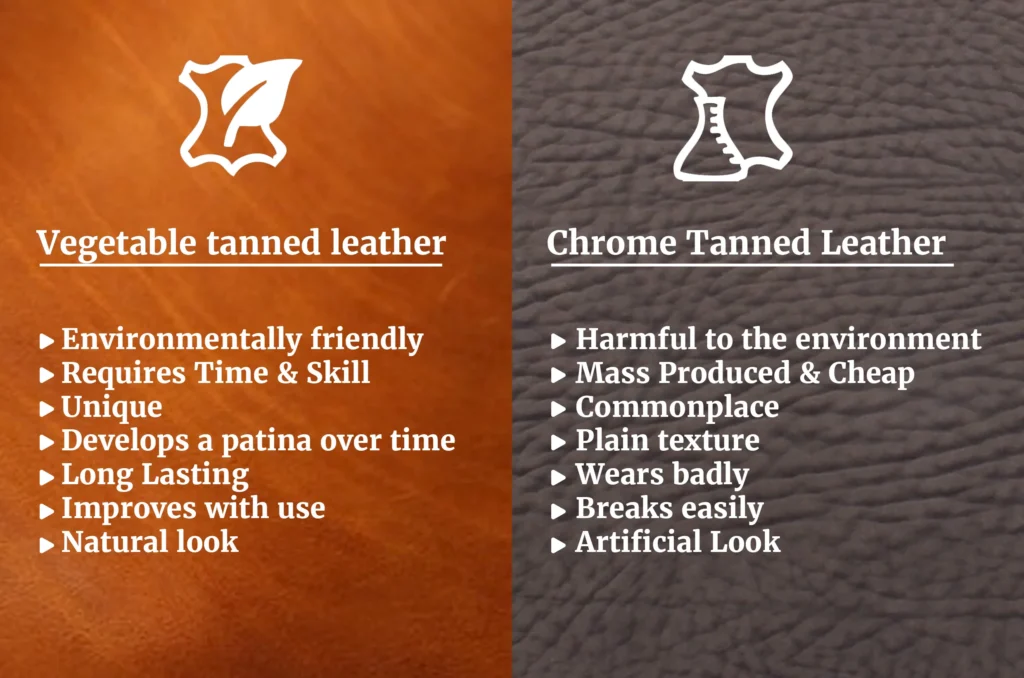
Vegetable tanning takes significantly longer than chrome tanning
Vegetable-tanned leather shows more visible fiber structure and character
Vegetable-tanned leather is generally more expensive
It produces firmer, sturdier leather
Chrome-tanned leather has a chemical scent, while vegetable-tanned leather has a natural, woody aroma
False Tanning Methods
False tanning refers to treatments that temporarily preserve hides but do not permanently stabilize the collagen fibers.
Rawhide
The hide is scraped, soaked, and stretched while drying. The result is stiff and brittle, commonly used for drum heads, laces, or chew toys.
Oil Tanning
Ancient oil tanning uses fish oil or fats to make leather water-resistant, supple, and extremely rugged.
Brain Tanning
Animal brain matter is worked into the hide to soften it, followed by smoking to improve preservation.