

Leather tanning is the chemical and physical process of converting raw animal hides into stable, usable leather. Untreated hides naturally decompose over time; tanning prevents this by permanently stabilizing the skin’s collagen fibers.
Before tanning begins, the hide is cleaned and flattened by removing hair, fat, and flesh. It is then treated with tanning agents that make the leather resistant to moisture, bacteria, and environmental wear. Once tanned, the hide becomes strong, flexible, and suitable for applications such as clothing, furniture, upholstery, and accessories.
Everyone has their own style preferences. But if you’re in the market for a wallet, there are some features that are universally appreciated amongst all wallet users.
Considerations for your next wallet
Leather Type: Full Grain Leather
Leather hide has different layers. The topmost layer is known as “full grain leather,” and it is the thinnest, smoothest, and softest leather available. You may have heard the term “genuine leather” before. Genuine leather is actually a marketing term for a lower quality leather. What we know as “genuine leather” is actually one of the stiffer, thicker, lower layers of the hide. Full grain leather is premium leather, and better for wallets. We use top-grain Nappa Leather here at Allett, which is the highest quality leather you can get. Thin – Originally, thin wallets were designed for those who had a more minimalist style. But now, thin wallets are universally appreciated and preferred. In the back pocket, a thick wallet is both uncomfortable and can cause back issues. In the front pocket, a thick wallet is difficult to manage, plus you get that awkward bulge on your leg that no one wants to see. Thin wallets are better, and we think the thinner the wallet, the better.
Wallet Profile
When it comes to everyday comfort, thickness may be the most important factor in choosing a leather wallet. A wallet is something you carry daily, often for years, and excess bulk quickly becomes more than a minor inconvenience. Thick wallets can feel uncomfortable when sitting, create pressure on the hips and lower back when carried in a back pocket, and cause awkward bulges in front pockets. Over time, they can also stretch and deform the leather, shortening the wallet’s lifespan. A thin wallet, on the other hand, sits naturally in your pocket, feels almost unnoticeable during daily movement, and maintains its shape far longer.
That said, “thin” doesn’t mean the same thing for every wallet style. Different wallet designs naturally vary in thickness, and choosing the right format depends on how much you carry and how you prefer to carry it. That brings us to our next point.
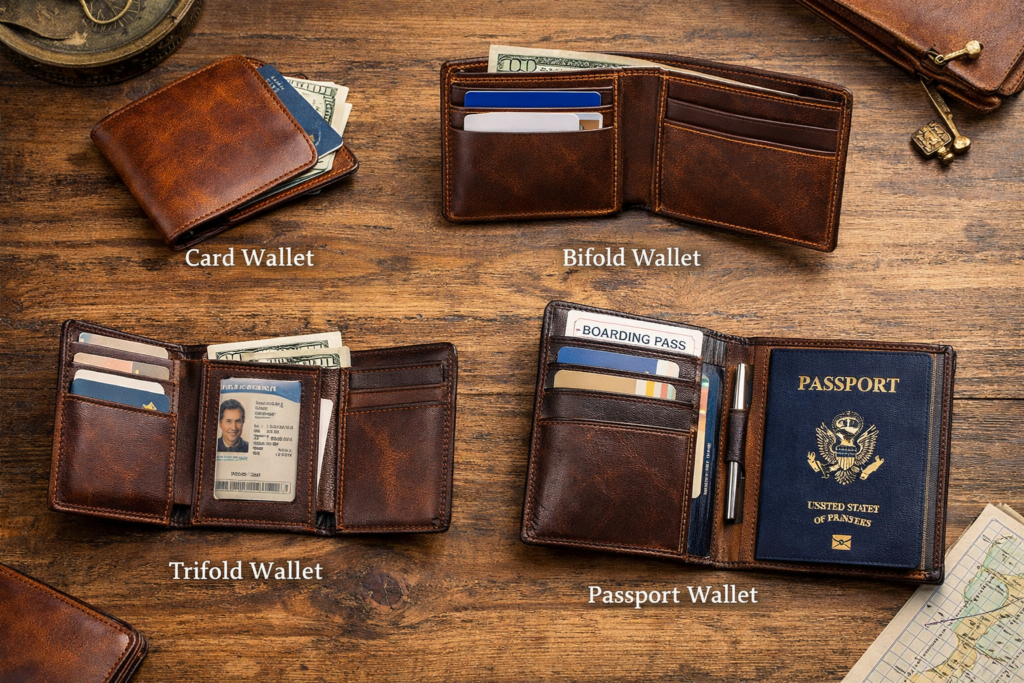
Wallet Type
When choosing a leather wallet, the style you select matters just as much as the material it’s made from. Different wallet types are designed for different lifestyles, travel habits, and carry needs. Understanding the pros and cons of each option can help you choose a wallet that fits seamlessly into your daily routine rather than working against it.
A card wallet is ideal for those who prefer a minimalist approach. Designed primarily to hold credit cards, IDs, and a small amount of folded cash, card wallets are simple, lightweight, and easy to carry. They work especially well for front-pocket carry and everyday errands. The main advantage is convenience and ease of access, but the trade-off is limited storage—if you regularly carry cash, receipts, or multiple cards, a card wallet may feel restrictive.
The bifold wallet is the most classic and widely used wallet style. It offers a familiar layout with dedicated card slots and a bill compartment, making it a versatile option for everyday use. Bifolds strike a balance between organization and accessibility, accommodating both cards and cash without feeling overly complicated. However, they can become bulky if overfilled, so they work best for those who keep their carry streamlined.
A trifold wallet is designed for maximum organization. With three folding panels, it provides extra card slots and compartments, making it a popular choice for people who carry multiple cards, IDs, or membership passes. The advantage of a trifold is storage capacity and structure, but the downside is comfort and flexibility. Trifolds tend to feel larger in the pocket and may show wear more quickly due to repeated folding and pressure points.
A passport wallet is built for travel and extended carry. In addition to holding a passport, these wallets typically include space for boarding passes, cards, cash, and travel documents. They’re ideal for international trips, airport navigation, and keeping everything organized in one place. The trade-off is size—passport wallets are not intended for everyday pocket carry and are best used during travel rather than daily routines.
RFID Blocking
Nearly all credit and debit cards today use RFID chips, and that means that an RFID blocking wallet is a must have. RFID blocking technology prevents the chip’s radiofrequency signals from being read and skimmed by unauthorized devices, protecting your cards and your information. Not all wallets include RFID-blocking technology, but Allett’s wallets are lined with a layer of nearly weightless US Military alloy that blocks radio frequency signals. These days, it’s critical that you purchase a wallet that includes some kind of RFID-blocking technology.